

Europe is preparing for one of the biggest changes to the way millions of travelers enter the continent.
Starting in the final quarter of 2026, visa-exempt travelers from countries such as the United States, Canada, the United Kingdom, Australia and Japan will need a new electronic travel authorization called ETIAS before traveling to 30 European countries for short stays.
But there is an important detail many travelers are missing:
ETIAS is not a visa.
It is a travel authorization for people who already benefit from visa-free travel to participating European countries.
And as of October 7, 2026, ETIAS is not yet operational. The European Union says it will announce the exact launch date several months before the system begins accepting applications.
So what exactly is ETIAS?
Who needs it?
How much will it cost?
Which countries will require it?
How long will it last?
And what happens if you arrive at the airport without one?
This complete ETIAS 2026 travel guide answers all of those questions and gives you a practical checklist before your next European trip.

ALT: ETIAS 2026 Europe travel authorization guide
What Is ETIAS?
ETIAS stands for the European Travel Information and Authorisation System.
It is an electronic travel authorization designed for nationals of countries whose citizens can currently travel visa-free to participating European countries for short stays.
It is similar in concept to systems such as the U.S. ESTA or Canada’s eTA, although ETIAS has its own rules and European legal framework.
The authorization will be linked electronically to the traveler’s passport.
Once approved, an ETIAS authorization will generally be valid for up to three years or until the passport used in the application expires, whichever comes first.
That means ETIAS is not something travelers will need to apply for before every individual holiday.
A traveler with a valid ETIAS can make multiple short trips to the participating European countries during its validity period.
Short stays are generally limited to 90 days in any 180-day period.
Is ETIAS a Visa?
No.
This is one of the most important things to understand.
| ETIAS | Schengen Visa |
|---|---|
| Travel authorization | Visa |
| For visa-exempt travelers | For travelers who require a visa |
| Online application | Formal visa application |
| €20 fee | Visa fee varies |
| Linked electronically to passport | Visa issued according to visa procedures |
| Short stays | Short stays subject to visa rules |
| Does not allow employment | Does not automatically allow employment |
ETIAS does not give travelers the right to work or live long-term in Europe.
If you want to work, study long-term or move to a European country, you may need the appropriate visa or residence authorization.
When Does ETIAS Start?
This is where travelers need to be careful because there is a lot of outdated information online.
Current status: October 2026
ETIAS is not yet operational.
The official European Union ETIAS website currently says that applications are not being collected and travelers do not need to take action yet.
The EU says ETIAS will start operations in the last quarter of 2026, but it has not yet announced the exact launch date.
ETIAS timeline
| Stage | Status |
|---|---|
| ETIAS development | Completed/preparation phase |
| EES operational | Since April 10, 2026 |
| ETIAS applications | Not yet open as of Oct. 7, 2026 |
| ETIAS launch | Expected Q4 2026 |
| Exact launch date | Not yet announced |
| Transition period | 6 months after launch |
| Grace period | Follows transition period |
The EU has designed a gradual implementation period rather than switching immediately from “no ETIAS” to “strict ETIAS checks” overnight.
ETIAS vs EES: Don’t Confuse Them
Another common source of confusion is EES.
The two systems are different.
EES
The Entry/Exit System records entries and exits of certain non-EU short-stay travelers and uses biometric information.
The EES became fully operational at the external border crossing points of participating European countries on April 10, 2026, after a progressive rollout.
ETIAS
ETIAS is a travel authorization that certain visa-exempt non-EU travelers will need before traveling to participating European countries.
In simple terms:
EES = border registration
ETIAS = travel authorization
They work alongside each other but serve different purposes.
Who Needs ETIAS?
As a general rule, ETIAS will apply if:
- You are not an EU national.
- You are a citizen of a country whose nationals can travel visa-free to the participating European countries.
- You do not already hold an applicable European residence card or residence permit that exempts you from ETIAS.
The system is expected to apply to citizens of 59 visa-exempt countries and territories.
That includes travelers from countries such as:
- 🇺🇸 United States
- 🇨🇦 Canada
- 🇬🇧 United Kingdom
- 🇦🇺 Australia
- 🇯🇵 Japan
- 🇳🇿 New Zealand
- 🇰🇷 South Korea
- 🇮🇱 Israel
- 🇦🇪 United Arab Emirates
- 🇧🇷 Brazil
- 🇦🇷 Argentina
- 🇲🇽 Mexico
The exact eligibility depends on nationality, travel document and individual circumstances.
The official ETIAS eligibility information should always be checked before traveling.
Who Does NOT Need ETIAS?
You generally do not need ETIAS if you are:
🇪🇺 An EU citizen
EU citizens do not need ETIAS to travel within the EU.
🇮🇸 Icelandic, 🇱🇮 Liechtenstein, 🇳🇴 Norwegian or 🇨🇭 Swiss national
These nationalities are outside the ETIAS requirement as defined by the system.
🪪 Certain European residents
If you hold an applicable residence card or residence permit issued by a participating European country, you may be exempt.
🛂 Travelers who require a visa
If your nationality requires a visa for the relevant European destination, ETIAS does not replace that visa.
What About UK Citizens?
Yes.
British nationals generally need ETIAS for short stays in the 30 participating European countries, unless they qualify under specific exceptions such as the EU-UK Withdrawal Agreement.
This is particularly important for British travelers because visa-free travel after Brexit can sometimes create confusion.
A UK passport holder traveling to France, Spain, Greece, Italy or another participating country for a short holiday will generally fall within the ETIAS system once it becomes operational.
Which European Countries Require ETIAS?
There are currently 30 European countries requiring ETIAS authorization for visa-exempt travelers.
| Country | ETIAS |
|---|---|
| 🇦🇹 Austria | Yes |
| 🇧🇪 Belgium | Yes |
| 🇧🇬 Bulgaria | Yes |
| 🇭🇷 Croatia | Yes |
| 🇨🇾 Cyprus | Yes |
| 🇨🇿 Czechia | Yes |
| 🇩🇰 Denmark | Yes |
| 🇪🇪 Estonia | Yes |
| 🇫🇮 Finland | Yes |
| 🇫🇷 France | Yes |
| 🇩🇪 Germany | Yes |
| 🇬🇷 Greece | Yes |
| 🇭🇺 Hungary | Yes |
| 🇮🇸 Iceland | Yes |
| 🇮🇹 Italy | Yes |
| 🇱🇻 Latvia | Yes |
| 🇱🇮 Liechtenstein | Yes |
| 🇱🇹 Lithuania | Yes |
| 🇱🇺 Luxembourg | Yes |
| 🇲🇹 Malta | Yes |
| 🇳🇱 Netherlands | Yes |
| 🇳🇴 Norway | Yes |
| 🇵🇱 Poland | Yes |
| 🇵🇹 Portugal | Yes |
| 🇷🇴 Romania | Yes |
| 🇸🇰 Slovakia | Yes |
| 🇸🇮 Slovenia | Yes |
| 🇪🇸 Spain | Yes |
| 🇸🇪 Sweden | Yes |
| 🇨🇭 Switzerland | Yes |
The official EU list confirms these 30 countries.
What About Ireland?
Ireland is not one of the 30 ETIAS countries.
This is an important distinction because Ireland has its own immigration and border arrangements.
Don’t assume that an ETIAS authorization is automatically an Irish entry authorization.
Travelers should check the specific requirements for Ireland separately.
What About Cyprus?
Cyprus is included among the 30 countries requiring ETIAS.
However, Cyprus has some special rules within the broader European travel framework, so travelers should check the current official information when planning an itinerary that combines Cyprus with other European destinations.
The official ETIAS material specifically notes that stays in Cyprus are calculated separately from the 90/180-day calculation applicable to the other participating countries.
How Much Does ETIAS Cost?
The standard ETIAS application fee is:
€20
The official fee is €20 per application.
However, some travelers are exempt from paying the fee.
For example, applicants who are under 18 or over 70 are exempt from the payment. Certain qualifying family members of EU nationals can also be exempt.
ETIAS cost example
| Travelers | Approx. ETIAS cost |
|---|---|
| 1 adult | €20 |
| 2 adults | €40 |
| Couple + child under 18 | €40 |
| Family of 4 with two adults + two minors | €40 |
| Adult + child under 18 + senior over 70 | €20 |
Each traveler still requires an individual ETIAS authorization where applicable.
There are no group applications.
Beware of Fake ETIAS Websites
This is one of the most important warnings in this article.
There are already websites online that use the name ETIAS, European travel imagery or government-looking designs.
Some may offer to submit applications for travelers while charging additional fees.
The European Union explicitly warns travelers to be careful with commercial intermediaries and unofficial websites. Applying directly through the official ETIAS system will cost €20; additional fees charged by intermediaries go to those intermediary providers.
Your safest rule:
Never search randomly and pay the first website advertising “ETIAS application.”
Use the official EU ETIAS website.
Official ETIAS website — European Union
What Information Will You Need?
The ETIAS application will require travelers to provide personal and travel-document information.
This includes information such as:
- Full name
- Surname
- Date of birth
- Place of birth
- Nationality
- Home address
- Parents’ first names
- Email address
- Phone number
- Passport/travel-document details
- Education information
- Current occupation
- Intended travel information
- Certain information relating to criminal convictions
- Certain information relating to travel to conflict zones
- Certain information relating to previous decisions requiring departure from a country
The application can be completed online once the system launches.
Do You Need Biometrics for ETIAS?
No biometric appointment is required for ETIAS itself.
ETIAS is not the same thing as the biometric registration process associated with EES.
The ETIAS application is electronic and linked to your travel document.
The official information also states that ETIAS applications do not require health or vaccination information and do not collect fingerprints as part of the ETIAS application itself.
How Long Does ETIAS Take?
Most applications are expected to be processed within minutes.
However, travelers should not treat that as a guarantee.
If additional information or documentation is needed, the process can take longer.
The official system says a decision can take up to 96 hours, with additional time possible when documentation or an interview is required. In some cases, processing can extend up to 30 days.
Smart travel rule:
Don’t wait until the night before your flight.
The EU recommends obtaining ETIAS before purchasing tickets and booking accommodation.
How to Apply for ETIAS
Once the system becomes operational, the process will be online.
Step 1 — Go to the official website
Use the official European Union ETIAS website.
Step 2 — Prepare your passport
You need an eligible travel document.
Step 3 — Complete the application
Enter your personal, passport and required background information.
Step 4 — Pay the fee
If you are not exempt, the application fee is €20.
Step 5 — Submit
Review every detail carefully before submission.
Step 6 — Check your email
You will receive confirmation that the application was submitted.
Step 7 — Save your application number
The confirmation includes a unique application number. Keep it somewhere safe.
What Happens After Approval?
Your ETIAS authorization is electronically linked to the passport you used during the application.
You don’t normally need to print a certificate.
However, you should make sure you travel with the same passport.
If you obtain a new passport, the old ETIAS authorization does not simply transfer to it.
You will generally need a new ETIAS because the authorization is linked to the original travel document.
How Long Is ETIAS Valid?
An approved ETIAS is generally valid for:
3 years
or
until your passport expires
whichever happens first.
Example
You receive ETIAS in November 2026.
Your passport expires in June 2028.
Your ETIAS will not remain valid until 2029.
It will end when the passport expires.
If you renew your passport, you need to apply for a new ETIAS.
Does ETIAS Guarantee Entry?
No.
This is another extremely important point.
ETIAS allows you to travel to the border, but it does not automatically guarantee admission.
Border authorities still check your passport and whether you meet the entry conditions.
The final decision remains with border authorities.
Think of it like this:
ETIAS = permission to travel under the visa-exempt framework
not
ETIAS = guaranteed entry
What Happens If You Don’t Have ETIAS?
Once the system becomes fully applicable, travelers who fall within the ETIAS requirement will generally need a valid authorization.
The official ETIAS FAQ states that travelers without the required authorization can be refused entry unless an applicable exception applies.
Airlines, cruise operators and other carriers will also be involved in checking travel authorizations once the system is operational.
So don’t treat ETIAS as something you can simply fix after landing.
What Is the ETIAS Transition Period?
The EU has planned a six-month transition period after ETIAS starts operating.
During the transition period, travelers will be encouraged to obtain ETIAS, but the rules are more flexible than they will be later.
According to the official EU information, travelers can still enter during this transition period without an ETIAS authorization as long as they meet the other entry conditions.
This is designed to give travelers, airlines and border authorities time to adapt.
What Happens After the Transition Period?
After the transition period comes the grace period.
The grace period is also planned to last six months.
The rules become stricter.
Travelers generally need an ETIAS authorization, although there is a limited exception for certain people making their first entry during that period after the transition period.
The European Commission can potentially extend these periods under the applicable rules.
In simple terms:
ETIAS launches → transition period → grace period → normal full implementation
That means travelers shouldn’t panic when ETIAS launches, but they also shouldn’t ignore it.
Does ETIAS Apply to Children?
Yes, children who fall within the ETIAS scope generally need their own authorization.
There are important fee exemptions:
Under 18 = exempt from the €20 fee
But exemption from the fee does not mean exemption from the ETIAS authorization itself.
Every eligible traveler needs their own authorization.
There are no group applications.
What If You Have Dual Citizenship?
Dual citizenship can make things more complicated.
If one of your nationalities is that of an EU country requiring ETIAS, you are generally exempt from ETIAS as an EU national.
However, the official ETIAS guidance says you must travel using the appropriate European travel document when relying on that European nationality.
Example
Imagine someone has:
🇺🇸 American passport
🇬🇷 Greek passport
If they travel to Greece using their Greek passport, they do not need ETIAS.
If they travel under their U.S. nationality, different rules may apply.
Always use the correct passport and check the rules before your trip.
What If You Have a European Residence Permit?
This is another important exemption.
A non-EU citizen who legally resides in a participating European country and holds an applicable residence permit or residence card may not need ETIAS.
The exact document matters.
The official ETIAS FAQ specifically states that eligible holders of certain European residence cards or permits do not need ETIAS.
Don’t assume every card or document qualifies.
If you have a residence document, verify it against the official ETIAS rules.
ETIAS and Schengen: What’s the Difference?
People often confuse ETIAS with Schengen.
They’re not the same thing.
Schengen Area
The Schengen Area is a group of European countries that operate without routine internal border checks between participating countries.
ETIAS
ETIAS is an electronic travel authorization for certain visa-exempt non-EU nationals traveling to participating European countries.
A traveler might therefore be:
Visa-exempt → needs ETIAS → travels within the Schengen area
ETIAS doesn’t create the Schengen Area.
It is an additional travel authorization system.
Can You Work in Europe With ETIAS?
No.
ETIAS is not a work permit.
If you are traveling to Europe for employment, you generally need the appropriate national work authorization or visa.
The official ETIAS information explicitly states that ETIAS does not give travelers the right to work in participating countries.
The same principle applies to long-term study or residence.
Can You Study in Europe With ETIAS?
It depends on the duration and circumstances.
Short study programs may fall within the short-stay framework, but studying for more than 90 days generally requires the appropriate long-term visa or authorization.
ETIAS should never be treated as a substitute for a student visa.
Do You Need ETIAS for an Airport Transit?
Not necessarily.
If you remain in the international transit area and do not enter the territory of the participating country, you may not need ETIAS.
However, if your itinerary requires you to pass through border control and enter the territory, the situation can change.
The official ETIAS FAQ specifically addresses airport transit and states that remaining in the international transit area does not generally require ETIAS.
Always check the specific itinerary.
ETIAS for Road Trips
ETIAS isn’t just for flights.
This is a common misconception.
The requirement applies regardless of whether you arrive:
✈️ By plane
🚆 By train
🚌 By bus
🚗 By car
🚢 By ship
The official EU information confirms that travelers entering the participating countries by land will also be covered by ETIAS requirements.
So a U.S. traveler flying to London and then taking a train or flight to France may need ETIAS for France once the system is fully applicable.
ETIAS for Cruise Travelers
Cruise travelers should also pay attention.
ETIAS will be relevant to visa-exempt non-EU nationals entering participating European countries for short stays.
Cruise operators and other carriers will have obligations concerning travel authorization checks once the system is operational.
If your cruise visits:
- Greece
- Italy
- Spain
- France
- Croatia
- Malta
- Portugal
you should check the ETIAS requirements applicable to your nationality and itinerary.
ETIAS and Your Flight Booking
Here’s where ETIAS becomes particularly important for TripRefuge readers.
Imagine you find an incredible €49 flight to Rome.
You book the hotel, arrange airport transportation, plan your itinerary.
Then you discover that you need an ETIAS authorization before traveling.
That’s exactly why travelers should check entry requirements before finalizing a trip.
TripRefuge can help with the planning side of your trip:
TripRefuge — Flights, Hotels & Travel Planning
But entry requirements should always be verified against official government or EU sources.
ETIAS Travel Checklist for 2026
Before your European trip, check:
| Checklist | Done? |
|---|---|
| Passport valid | ☐ |
| Correct passport for nationality | ☐ |
| Visa requirement checked | ☐ |
| ETIAS requirement checked | ☐ |
| Official ETIAS website used | ☐ |
| €20 fee checked | ☐ |
| ETIAS email saved | ☐ |
| Passport number verified | ☐ |
| Accommodation booked | ☐ |
| Travel insurance checked | ☐ |
| Flight details saved | ☐ |
| EU passenger rights understood | ☐ |
Smart Europe Travel Planning in 2026
ETIAS is only one part of planning a European trip.
There are several other things travelers should consider.
1. Check passport validity
Don’t wait until the week before departure.
Different countries can have different passport-validity rules.
2. Check entry requirements
Visa rules differ by nationality.
3. Check airport transfer options
The cheapest flight isn’t always the cheapest trip.
A €30 flight to an airport 100 km from your destination can become more expensive than a €70 flight into a central airport.
4. Compare accommodation
Use several options before booking.
5. Check local taxes
Cities across Europe increasingly use tourist taxes.
6. Check transport passes
A public transportation pass can sometimes save money on longer stays.
7. Keep copies of important documents
Store copies securely offline.
Don’t Forget EU Passenger Rights
If you’re traveling within Europe, you should also understand your passenger rights.
EU passenger protection rules cover situations including:
- Flight cancellations
- Significant delays
- Denied boarding
- Overbooking
- Lost or damaged luggage
- Certain missed connections
The European Commission states that EU air passenger rights continue to provide protections for travelers, and revised rules were approved in 2026.
Under current rules, certain qualifying delays or cancellations can result in compensation of:
| Flight distance | Potential compensation |
|---|---|
| Up to 1,500 km | €250 |
| More than 1,500 km within EU / 1,500–3,500 km | €400 |
| More than 3,500 km | €600 |
Eligibility depends on the specific circumstances and whether the relevant EU rules apply.
Official EU passenger rights guide
What Travelers Should Do Right Now
If you’re reading this in October 2026, there is no reason to panic.
ETIAS applications are not currently open.
The official EU website says that no applications are being collected at this time.
Instead:
1. Check your passport.
Make sure you know which passport you will travel with.
2. Check whether your nationality is visa-exempt.
3. Bookmark the official ETIAS website.
4. Avoid unofficial application websites.
5. If you’re booking a trip for late 2026 or 2027, check ETIAS status again before departure.
6. Don’t pay anyone claiming they can obtain an ETIAS today.
The system is not currently accepting applications.
ETIAS 2026: Quick Answers
Is ETIAS a visa?
No. It is an electronic travel authorization for certain visa-exempt travelers.
How much is ETIAS?
The standard fee is €20, with exemptions including applicants under 18 and over 70.
How long does ETIAS last?
Up to three years or until the passport expires, whichever comes first.
Can I work with ETIAS?
No. ETIAS is not a work permit.
Can Americans travel to Europe without ETIAS after it launches?
Not if they fall within the ETIAS requirement and no exemption applies.
Do UK citizens need ETIAS?
Generally yes, unless a specific exemption applies.
Do EU citizens need ETIAS?
No.
Does ETIAS guarantee entry?
No. Border authorities make the final entry decision.
Can children get ETIAS?
Yes, where required. Children under 18 are exempt from the €20 fee.
Can I apply now?
No. As of October 7, 2026, ETIAS applications are not yet open.
When will ETIAS start?
The EU currently says the last quarter of 2026, but the exact launch date has not yet been announced.
ETIAS vs ESTA: Are They the Same?
They are similar in concept but not identical.
The United States uses ESTA for certain visa-exempt travelers.
Europe will use ETIAS.
Both are electronic travel authorization systems rather than traditional visas.
But travelers should not assume that the rules are identical.
| Feature | ETIAS | ESTA |
|---|---|---|
| Region | Europe | United States |
| Type | Travel authorization | Travel authorization |
| Traditional visa? | No | No |
| Online application | Yes | Yes |
| Linked to passport | Yes | Yes |
| Validity | Up to 3 years | Generally 2 years |
| Purpose | Short stays | Visa Waiver Program travel |
The key point is simple:
ETIAS is Europe’s own system.
Why ETIAS Matters for Travel Planning
At first glance, €20 may not seem like a major travel expense.
And for most travelers, it isn’t.
The bigger issue is planning.
A traveler may spend hundreds or thousands of euros on:
- Flights
- Hotels
- Tours
- Rental cars
- Cruises
- Restaurants
- Transfers
The last thing you want is an avoidable border problem because you didn’t check the entry requirements.
That’s why ETIAS belongs on your travel-planning checklist alongside your passport, flights and accommodation.
The Future of European Travel
ETIAS is part of a broader move toward digital border management.
Travelers are increasingly interacting with electronic systems before they arrive at their destination.
Instead of relying entirely on paper documents and physical visa stickers, governments are using:
- Digital travel authorizations
- Electronic border records
- Biometric systems
- Automated checks
- Online applications
For travelers, this can make border procedures more digital and predictable—but it also means pre-trip preparation matters more than ever.
Final Thoughts: Don’t Let ETIAS Surprise You
ETIAS may sound complicated.
It doesn’t have to be.
For most travelers affected by the new system, the basic idea is straightforward:
Check whether you need ETIAS → apply through the official EU system → pay the €20 fee if applicable → receive authorization → travel with the same passport.
As of October 2026, applications are not yet open, and the EU has not announced the exact launch date. The current official target is the last quarter of 2026.
The smartest thing travelers can do right now is not rush to apply.
Instead, bookmark the official website, check your passport and keep an eye on the official announcement.
And when ETIAS officially launches, don’t use a random website offering to “process your European visa.”
Use the official EU ETIAS website.
Check ETIAS directly with the European Union
Then use TripRefuge to continue planning the rest of your journey.
Plan flights, hotels and experiences with TripRefuge
Europe is still waiting for you.
Just make sure your travel documents are ready before you go. ✈️🌍
🎥 VIDEO
Video title:
Latest Updates on ETIAS for Travel to Europe
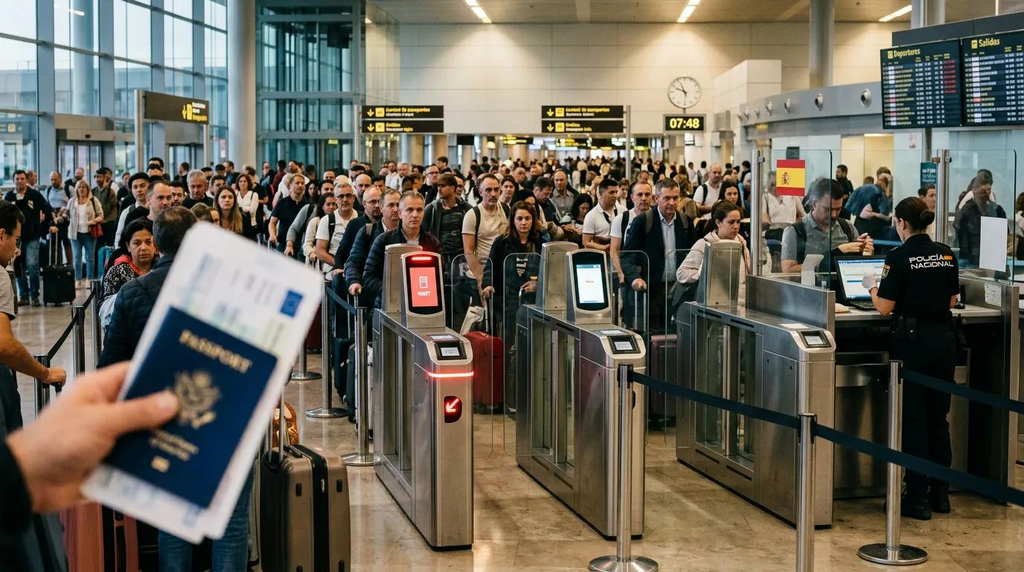
ALT:Travelers preparing passports for Europe travel
European Cities

ALT:Popular European destinations requiring ETIAS
🔗 INTERNAL LINKS ΓΙΑ TRIPREFUGE
Cheap flights → The Secret Tricks Travelers Use to Find Cheap Flights in 2026
Europe budget travel → Best Budget Trips in Europe 2026
Cheapest destinations → 25 Cheapest Destinations to Visit in 2026
Travel on a budget → Travel on a Budget with TripRefuge
Barcelona → Barcelona on a Budget 2026
Athens → Athens on a Budget 2026
Main comparison table
| Question | ETIAS 2026 |
|---|---|
| What is it? | Electronic travel authorization |
| Who needs it? | Certain visa-exempt non-EU travelers |
| Countries covered | 30 |
| Visa-exempt nationalities | 59 |
| Cost | €20 |
| Under 18 | Fee exempt |
| Over 70 | Fee exempt |
| Validity | Up to 3 years |
| Passport linked | Yes |
| Short stay | Up to 90 days in 180 days |
| Work authorization | No |
| Current status | Not operational as of Oct. 7, 2026 |
| Expected launch | Q4 2026 |